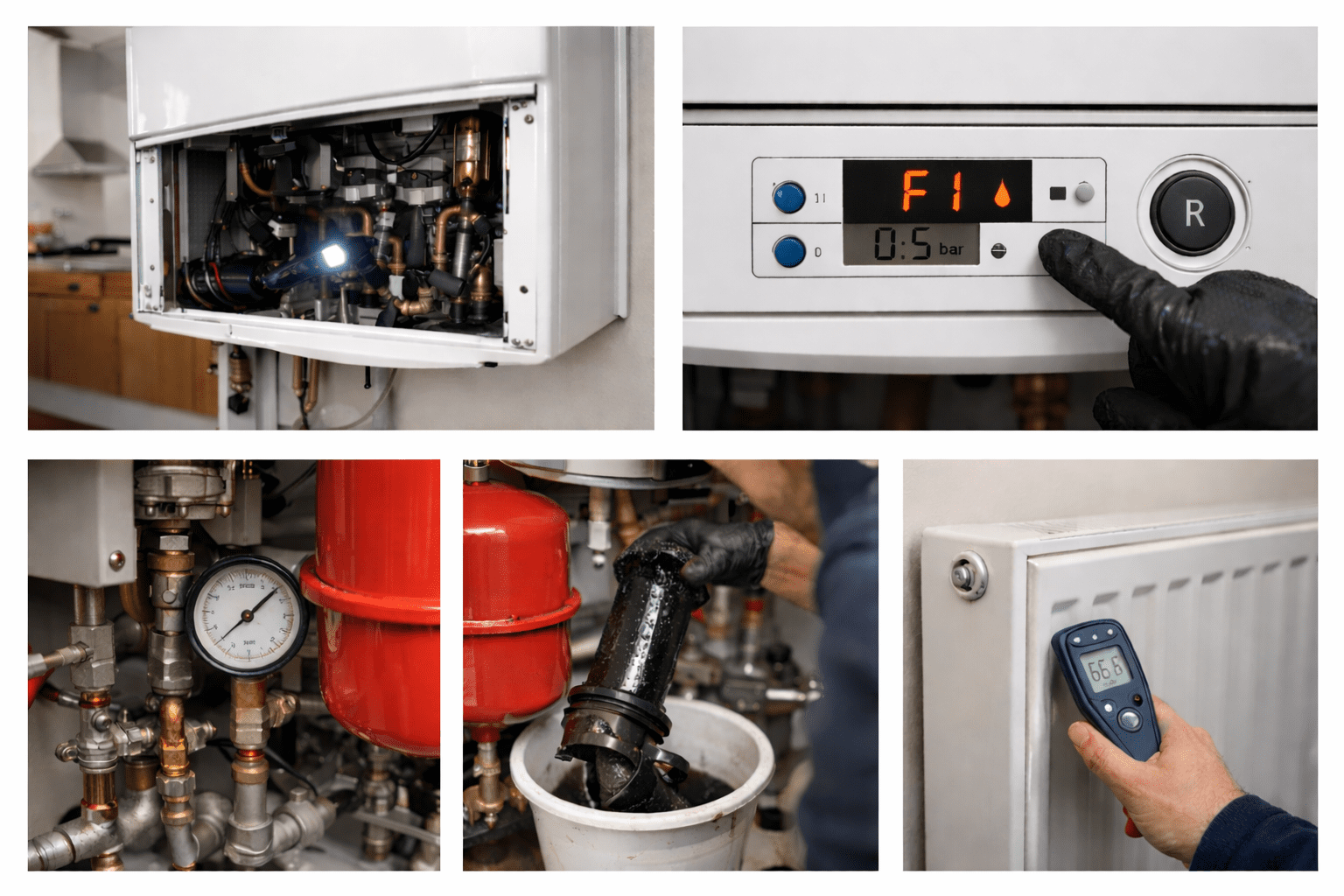
A homeowner in North London contacted Squires and Duran Plumbing and Heating after experiencing ongoing problems with their boiler and central heating system. The property, a two-storey Victorian terrace, relied on a combi boiler supplying heating to ten radiators across two floors.
The customer reported inconsistent heating, noisy pipework, fluctuating boiler pressure, and unreliable hot water. Upstairs radiators struggled to heat fully, while the boiler regularly reset during heating demand.
Initial call and assessment
During the initial call, we asked targeted questions to understand the issue. The customer confirmed pressure drops, intermittent fault codes, and recent gurgling noises within the heating system. Due to the loss of reliable heating and hot water during colder months, we booked a same-day visit.
We advised the customer to avoid repressurising the system repeatedly before our arrival, as this often masks underlying faults.
On-site arrival and safety checks
Upon arrival, we carried out full safety checks around the boiler, flue, and surrounding pipework. We inspected visible joints for leaks, checked ventilation clearances, and confirmed isolation points for water and gas.
We confirmed safe access to the boiler and checked the pressure relief discharge pipe for signs of recent discharge, which often indicates pressure instability within the system.
System walkthrough and fault confirmation
We asked the homeowner to demonstrate the issue while the system operated under demand. Hot water output fluctuated at taps, and heating response remained uneven across the property. Radiators on the ground floor warmed first, while upstairs units remained lukewarm.
We noted audible noise within pipework and radiators, which often points to air, poor circulation, or internal debris.
Boiler inspection and pressure testing
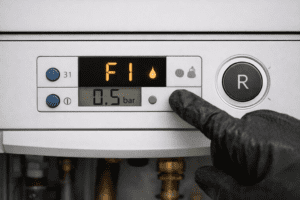
We inspected the boiler display and reviewed fault history. During heating demand, pressure rose sharply before dropping back when the system cooled. This behaviour pointed towards a pressure control issue rather than a simple boiler repair issue, like a leak.
We tested cold system pressure and observed pressure changes during operation, confirming unstable pressure behaviour outside expected tolerances.
Expansion vessel and circulation checks
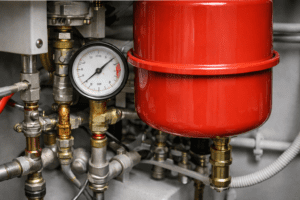
We tested the expansion vessel pre-charge and confirmed it sat below the required level for the system. This explained pressure spikes during heating cycles and contributed to boiler shutdowns.
We then assessed circulation by checking flow and return temperatures and inspecting the magnetic filter. The filter contained heavy sludge and debris, restricting water movement through the system and reducing heat delivery to the upper floor.
Diagnosis
We identified two connected faults affecting system performance:
- A weak expansion vessel pre-charge causing pressure instability and boiler shutdowns
- Sludge build-up within the system restricting circulation to upstairs radiators
Together, these issues explained the inconsistent heating, noise, and unreliable hot water.
Repair plan and approval
We explained the findings to the customer in clear terms and outlined the repair process. The agreed plan focused on stabilising system pressure and restoring circulation without unnecessary disruption.
We confirmed costs and time on site before starting work. The customer was more than happy for us to begin right away as they had family staying over in just a few days.
Pressure stabilisation and expansion vessel correction
We safely isolated and drained the relevant section of the system. We corrected the expansion vessel charge and refilled the system to the correct cold pressure. We then ran the boiler through multiple heating and hot water cycles to confirm pressure stability.
Pressure remained consistent throughout testing, with no further spikes or drops.
System cleaning and circulation improvement
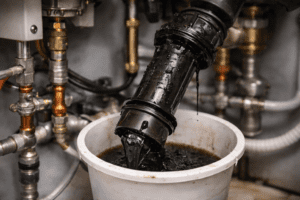
We cleaned the magnetic filter and removed accumulated debris. We carried out a targeted flush to clear affected sections of pipework, restoring flow to the upstairs heating loop.
We bled all radiators, checked valve operation, and balanced the system to ensure even heat distribution across both floors.
Performance testing after repair
We ran the system under sustained demand to confirm results. Radiators heated evenly throughout the property, pipework noise reduced, and hot water delivery stabilised.
We checked all disturbed joints for leaks and confirmed the boiler operated smoothly without fault codes or pressure fluctuation.
System protection and handover
We added inhibitor to protect against corrosion and future sludge build-up. We advised the homeowner on correct pressure monitoring and early warning signs to watch for.
We explained what caused the fault, how the repair resolved it, and how regular boiler servicing supports long-term reliability.
Project outcome
The boiler and heating system returned to stable operation on the same day. Pressure remained consistent, heating reached all areas of the property evenly, and hot water delivery remained reliable.
By addressing both pressure control and circulation issues, we restored system performance and reduced the risk of repeat faults during peak heating demand.